
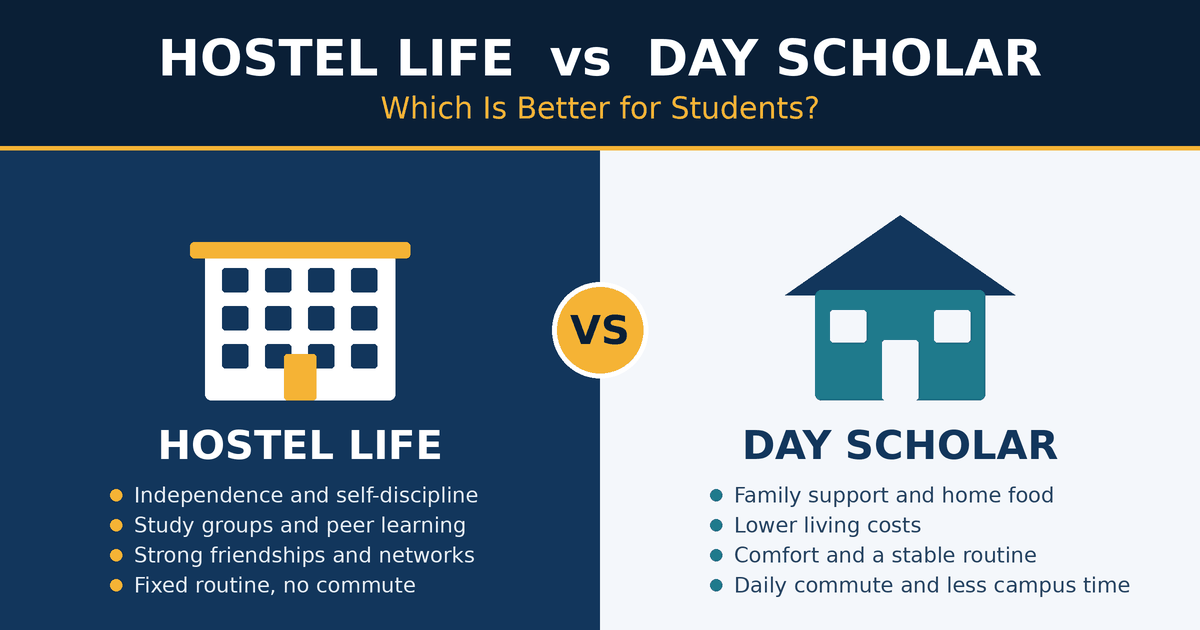
Choosing between hostel life and day scholar life is one of the most important decisions students face when starting college or university. For some, living in a hostel means freedom, new friendships, late-night conversations, and the chance to become independent. For others, staying at home offers comfort, family support, familiar surroundings, and a more manageable daily routine.
But when it comes to studies, personal growth, expenses, and overall college experience, which option is actually better?
The answer is not as simple as choosing between home and a hostel. Both lifestyles have their advantages and challenges, and the right choice depends on a student’s priorities, financial situation, college location, and personality.
In this guide to hostel life vs day scholar life, we will compare both options in terms of academics, independence, expenses, social life, mental well-being, and career development. By the end, you will have a clearer idea of which lifestyle suits you best.
What Is Hostel Life?
Hostel life refers to living in accommodation provided by a college, university, or private hostel while pursuing your education. Students usually share rooms or live in individual rooms, use common facilities, and follow the rules established by the hostel administration.
For many students, hostel life is their first experience of living away from their families. They learn to manage their daily schedules, handle personal responsibilities, interact with people from different backgrounds, and solve problems independently.
Hostel life also creates opportunities to participate in campus activities, form close friendships, attend study groups, and explore interests beyond academics.
However, it comes with challenges such as adjusting to roommates, managing expenses, following hostel timings, and dealing with homesickness. Students must also learn to balance social activities with their academic responsibilities.
What Is Day Scholar Life?
A day scholar is a student who attends college or university during the day and returns home after classes instead of living in a hostel.
Day scholars generally enjoy the comfort of their homes, regular family interaction, and greater access to familiar food and surroundings. They may also benefit from a quieter personal space, depending on their home environment.
Another advantage is that students can maintain closer relationships with their families while continuing their education. For those studying in a college near their home, this arrangement can be practical and economical.
However, commuting can become tiring, particularly when the college is far away. Day scholars may also need to plan their schedules carefully to attend early classes, participate in extracurricular activities, or remain on campus for group projects.
Hostel Life vs Day Scholar: A Quick Comparison
| Factor | Hostel Life | Day Scholar Life |
|---|---|---|
| Independence | Encourages independence from an early stage | Independence develops alongside family support |
| Expenses | Usually includes accommodation and mess charges | Usually includes transport and daily expenses |
| Academic environment | Easier access to classmates and campus resources | Depends on commute, home environment, and schedule |
| Social life | More opportunities for everyday interaction | Social activities are often limited by travel time |
| Family time | Less frequent face-to-face interaction | Regular time with family |
| Time management | Requires managing personal tasks and study hours | Requires balancing classes, commuting, and home life |
| Privacy | Depends on room-sharing and hostel facilities | Depends on the home environment |
| Personal growth | Builds self-reliance through everyday responsibilities | Builds responsibility while retaining family support |
| Best suited for | Students studying far from home or seeking campus immersion | Students with suitable colleges nearby and manageable commutes |
The comparison shows that neither option is automatically superior. The experience depends on the facilities available, the student’s habits, and the environment in which they study.
1. Academic Performance: Which Lifestyle Is Better for Studies?
Academic performance is often the biggest concern for students and parents when comparing hostel life and day scholar life.
Advantages of studying while living in a hostel
Hostel students may find it easier to organise group study sessions, discuss difficult topics with classmates, and access college libraries or laboratories outside regular class hours. Living close to campus can also make attending extra classes, workshops, and faculty sessions more convenient.
For students who struggle to study alone, having academically motivated friends nearby can be helpful. A supportive peer group may encourage better study habits and make challenging subjects easier to understand.
However, hostel life can also become distracting. Frequent conversations, social gatherings, noisy roommates, and late-night activities can interfere with sleep and concentration.
Advantages of studying as a day scholar
Day scholars may have access to a quieter study environment, familiar routines, and support from family members. Students who already have strong study habits can use this stability to maintain a consistent academic schedule.
The main challenge is time management. Long commutes may reduce the time available for revision, assignments, rest, and extracurricular activities.
The verdict: Hostel life can offer better access to campus resources, while day scholar life can provide a more structured routine. Neither guarantees higher marks. Consistent study habits, good sleep, discipline, and access to learning resources matter more than residential status alone.
2. Cost of Living: Hostel vs Day Scholar
Financial considerations can significantly influence this decision, particularly for families managing tuition fees, accommodation, and other college expenses.
How much does hostel life cost?
Hostel students may need to pay for accommodation, mess facilities, electricity or maintenance charges, laundry, personal supplies, and occasional travel home.
Some colleges include meals and other facilities in their hostel fees, while others charge separately. Private hostels may have different pricing structures depending on location and amenities.
Although hostel living can be expensive, it may reduce daily commuting costs and make it possible to attend a college that offers a better course or stronger career opportunities.
How much does day scholar life cost?
Day scholars usually avoid hostel accommodation charges, but their expenses may include college transport, public transportation, fuel, food outside the home, and other daily travel costs.
Living at home can be more affordable when the college is nearby. However, a long commute can increase both transportation expenses and the time spent travelling.
Before making a decision, compare the total cost of both options instead of looking only at the hostel fee.
The verdict: Day scholar life is often more economical when a suitable college is close to home. Hostel life may justify the additional expense when it provides access to a preferred institution, valuable facilities, or opportunities unavailable locally.
3. Social Life and Friendships
College is not only about attending lectures and passing examinations. It is also a period of meeting new people, discovering interests, and developing communication skills.
Hostel students often have more opportunities to interact with classmates because they share meals, attend activities together, and spend time on campus after classes. These everyday interactions can lead to close friendships and lasting memories.
Day scholars can build equally meaningful friendships through lectures, clubs, college events, internships, and group projects. However, they may need to plan their social activities around transportation schedules and family responsibilities.
Neither lifestyle guarantees a better social life. A hostel student can feel lonely, while a day scholar can have an active and fulfilling college experience.
The important factor is making an effort to connect with people, participate in activities, and maintain healthy friendships.
4. Independence and Personal Development
One of the strongest arguments in favour of hostel life is the opportunity to become independent.
Students living away from home must learn to manage their budgets, organise their belongings, maintain personal hygiene, complete everyday tasks, and make decisions without immediate parental assistance.
They also learn to adapt to different personalities, resolve disagreements, and respect shared spaces. These experiences can help prepare them for employment and adult responsibilities.
Day scholars can develop the same skills, although their responsibilities may be different. Managing a commute, meeting deadlines, balancing family expectations, and taking ownership of personal decisions can also encourage maturity.
The difference is that hostel students generally encounter more daily responsibilities related to independent living, while day scholars may receive more support at home.
The verdict: Hostel life can accelerate practical independence, but maturity is not determined by where a student sleeps. Responsibility, decision-making, and willingness to learn are what make the difference.
5. Mental Well-Being: Comfort vs Homesickness
The emotional side of college life deserves as much attention as academic performance.
For some students, hostel life is exciting. They enjoy meeting new people, exploring a new environment, and experiencing greater freedom. For others, being away from family can initially feel overwhelming.
Homesickness, difficulty adjusting to roommates, lack of privacy, and academic pressure can affect the hostel experience. A supportive friend group, good hostel management, and access to counselling can make adjustment easier.
Day scholars may benefit from regular family interaction, familiar surroundings, and emotional support at home. At the same time, family expectations, household responsibilities, or a stressful home environment can create challenges of their own.
Students should not assume that one arrangement automatically provides better mental well-being. The quality of their living environment, relationships, and support system matters considerably.
The University Grants Commission provides guidance for higher education institutions on student health, welfare, and psychological and emotional well-being. Students can also explore the official UGC well-being guidelines for further information.
If you are struggling to adjust to college life, talking to a trusted person, faculty mentor, or counsellor can be a sensible first step.
6. Time Management and Daily Routine
Time management can make a noticeable difference in a student’s college experience.
Hostel students save commuting time when their accommodation is close to campus. They may be able to attend morning lectures, use the library in the evening, or participate in extracurricular activities without worrying about travelling home.
However, they must manage meals, laundry, cleaning, and other personal tasks. Poor planning can lead to irregular sleep schedules and unfinished assignments.
Day scholars may have a more predictable routine if their college is nearby. Family support can also make everyday tasks easier.
On the other hand, students who spend several hours travelling each day may find it difficult to manage assignments, revision, and rest.
A practical approach is to calculate your daily travel time before choosing a college or accommodation arrangement. Even a seemingly short commute can become tiring when traffic, waiting times, and changing schedules are considered.
7. Safety, Privacy, and Comfort
Safety and privacy should be part of the decision, particularly for students moving away from home for the first time.
A good hostel should have appropriate security arrangements, clear rules, responsible management, hygienic facilities, and a reliable process for addressing complaints. Students should also check room-sharing arrangements, visitor policies, emergency procedures, and access to medical assistance.
Day scholars should consider the safety of their commute, the reliability of college transportation, and whether they can return home safely after late classes or campus events.
Privacy differs between individuals and households. Some students appreciate having roommates and shared spaces, while others prefer a personal room and familiar surroundings.
Before choosing a hostel, visit the premises if possible, speak with current residents, and review the facilities rather than relying solely on photographs or promotional claims.
8. Career Opportunities and Campus Exposure
A student’s living arrangement can influence how easily they participate in opportunities outside the classroom.
Hostel students may find it more convenient to attend networking events, college festivals, placement preparation sessions, workshops, internships, and student club meetings that extend beyond normal class hours.
Day scholars can access these opportunities too, especially when they plan ahead and have reliable transport. They can also build professional networks through online communities, internships, competitions, and industry events.
What matters is not simply how much time students spend on campus, but how effectively they use it.
For students who want to explore career options, our guide to career planning for students can be linked here if a relevant article is available on your website.
Pros and Cons of Hostel Life vs Day Scholar Life
Hostel life: Advantages and disadvantages
Advantages
- Encourages independence and practical life skills.
- Makes it easier to participate in campus activities.
- Provides more opportunities for peer learning and group study.
- Helps students meet people from different backgrounds.
- Can reduce commuting time when the hostel is near the college.
Disadvantages
- Can involve higher living expenses.
- May cause homesickness, particularly during the initial adjustment period.
- Shared rooms can limit privacy.
- Noise and social distractions may affect academic routines.
- Requires students to manage everyday responsibilities independently.
Day scholar life: Advantages and disadvantages
Advantages
- Allows regular interaction with family.
- Can be more economical when the college is nearby.
- Offers familiar surroundings and established routines.
- May provide a quieter or more private study environment.
- Allows students to maintain close connections with their local community.
Disadvantages
- Daily commuting can consume time and energy.
- Long travel distances may limit participation in campus activities.
- Students may have fewer opportunities for spontaneous group study.
- Household responsibilities can affect study schedules.
- Dependence on transport schedules can make late college events difficult to attend.
How to Choose Between Hostel Life and Day Scholar Life
Before making a final decision, consider these five questions:
1. Is your preferred college far from home?
If travelling daily would be exhausting or impractical, a hostel may be the more sensible option.
2. What is your family’s budget?
Compare the full cost of accommodation, food, transport, laundry, and personal expenses. Choose an arrangement that is financially manageable.
3. Can you study effectively at home?
If your home environment supports concentration and your commute is manageable, day scholar life may suit you well.
4. Are you comfortable living independently?
Students who are willing to take responsibility for their daily needs may enjoy hostel life. Those who need time to adjust can still develop independence gradually.
5. What opportunities does the college offer?
Consider access to laboratories, libraries, placements, extracurricular activities, internships, and other facilities. A good educational environment should be a major factor in your decision.
If possible, discuss the options with current students and parents. Their practical experiences may reveal details that are not mentioned in college brochures.
Conclusion: Hostel Life vs Day Scholar — Which Is Better?
When comparing hostel life vs day scholar life, there is no single answer that works for every student. Hostel life can offer independence, stronger day-to-day peer interaction, and convenient access to campus activities. Day scholar life can provide family support, familiar routines, and potential savings on living expenses.
The most important consideration is the environment in which you can learn, grow, and remain healthy.
A student living in a hostel may benefit from greater independence but struggle with distractions or homesickness. A day scholar may enjoy family support but lose valuable time to commuting. Both can succeed academically, build meaningful friendships, and develop the skills needed for a successful career.
Choose a hostel if the distance from home, quality of facilities, or opportunities available make it worthwhile. Choose day scholar life if you have a suitable college nearby, a supportive home environment, and a manageable commute.
Ultimately, the better choice is the one that supports your education, financial circumstances, personal growth, and well-being—not the one that sounds more exciting to other people.